KNOWLEDGE LIBRARY

Change Management Model
Change Management Model The insidious sources of cognitive bummers can be broken down into 3 groups: Process-related. Anything that has to do with the glitches and communication issues arising from a sloppy development process, e.g. too many meetings, unfocused online messaging as opposed to face-to-face talks, not knowing who to go to and where to report to if...
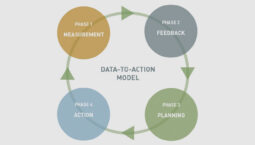
The Managing Transitions Model
Analyzing and Evaluating, Change Management THE MANAGING TRANSITIONS MODELA STRATEGY ASSOCIATES/HARRINGTON INSTITUTE LEANBRIEFAdapted by Frank Voehl from an article by William Bridges and Susan Mitchell Bridges THE MANAGING TRANSITIONS MODEL Change is not a new concept for leaders or their constituents. Leaders understand by now that organizations cannot be just endlessly “managed,” replicating yesterday’s practices...
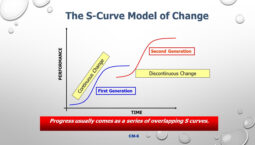
S-Curve Transformation Theory
S-CURVE TRANSFORMATION THEORY Transformation theory, first explained by George Land (also George Ainsworth Land) (1927-) is a description of the structure of change in natural systems. Land’s research, detailed in his seminal Grow or Die, illustrates change as a series of interlocking S-curves, each interspersed with two breakpoints. Breakpoints are the moments in time when the...
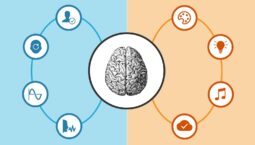
Comparison of change theories
COMPARISON OF CHANGE THEORIES LEWIN’S THREE-STEP CHANGE THEORY Kurt Lewin (1951) introduced the three-step change model. This social scientist views behavior as a dynamic balance of forces working in opposing directions. Driving forces facilitate change because they push employees in the desired direction. Restraining forces hinder change because they push employees in the opposite direction. Therefore, these forces must...

Change Management Toolkit
CHANGE MANAGEMENT TOOLKIT A MANAGING TRANSITIONS APPROACH FOR ORGANIZATIONAL CHANGE OBJECTIVES Discuss some reasons that managing change is so challenging Review some dynamics that underlie the change process Examine some change management models Identify specific actions you can take to lead/manage change in your office

On Innovation: The Art Of Becoming An Innov-Preneur
Anyone who claims innovation is easy is kidding himself. Commanding your employees to “be innovative!” is like shouting, “Quick—don’t think about elephants!”, and then wondering why their eyes glaze and minds go blank. More importantly, proponents frequently suppose that innovation begins and ends with creativity, thereby discounting the vast number of electrifying ideas that die...

The ABCs Of Innovation
Emerson sales reach $17.1 billion, an 11 percent increase over the prior year. Emerson airs its first-ever TV commercials to spotlight.
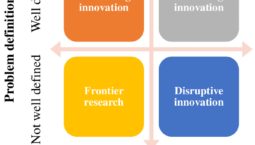
Innovation Matrix
Lorem ipsum dolor sit amet, consectetur adipiscing elit. Nunc iaculis purus at lectus viverra rutrum ut vel eros.